

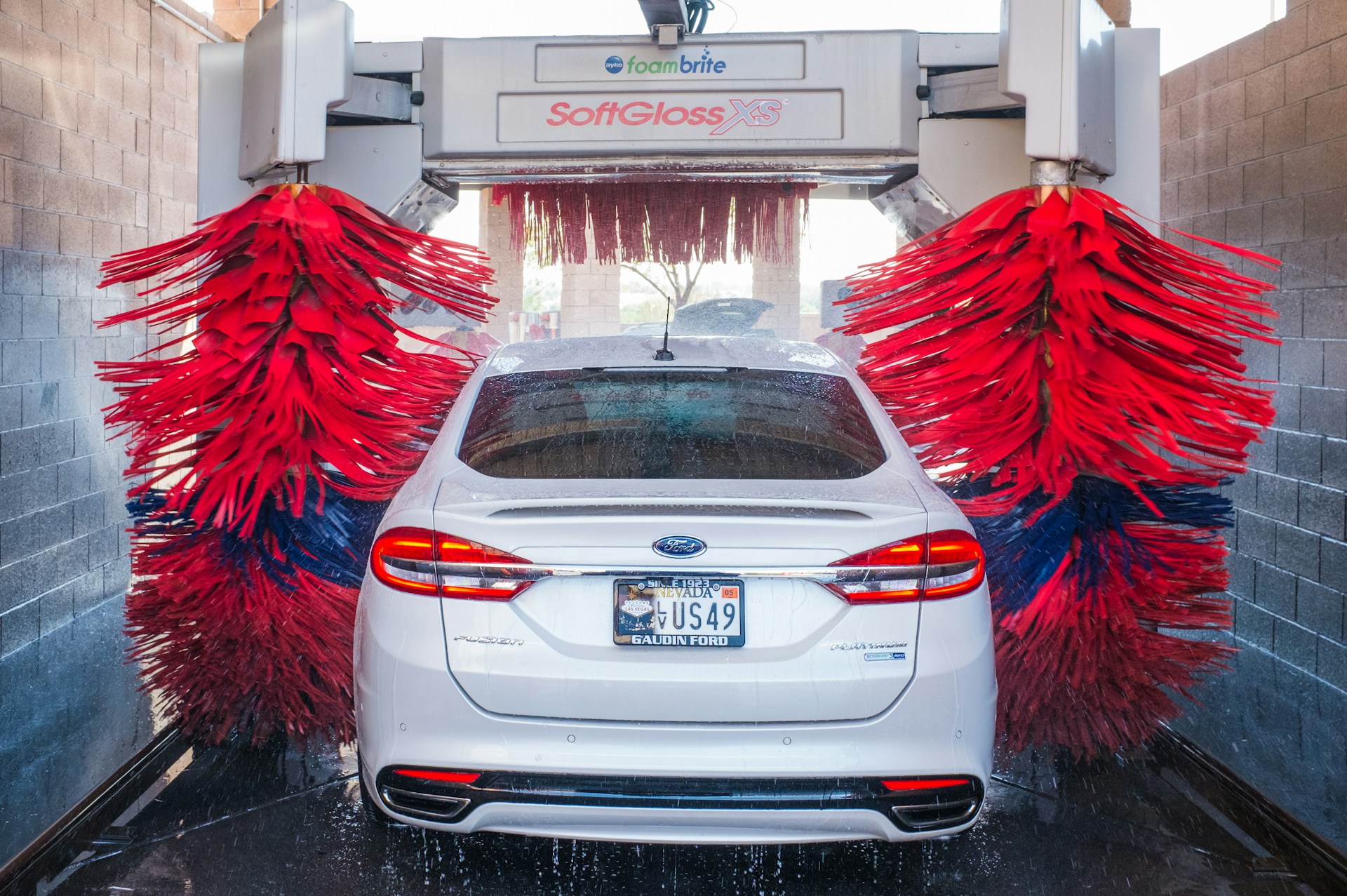
Professional car washing has evolved from an occasional convenience into a regular habit for many American drivers. Express tunnels, subscription plans, and changing consumer preferences have helped reshape the category, creating new opportunities for successful car wash operators looking to grow.
For owners of proven car wash businesses, that growth can take several forms: opening additional company-owned locations, franchising, or pursuing a combination of strategies. For concepts with strong unit economics and repeatable operations, franchising can provide a capital-efficient path to expansion by enabling qualified franchisees to invest in and operate new locations using your brand and operating systems.
This article explains what car wash franchising means, the market trends shaping the category, how to determine whether your car wash may be franchisable, and the steps involved in building a franchise system.
Key Takeaways
- Car wash franchising lets an owner grow their brand using franchisees’ capital and effort rather than funding every new site themselves.
- Demand is strong: nearly 80% of U.S. drivers now use a professional car wash most often, up from 48% in 1994 (ICA).
- The category is fragmented, with no single company holding more than 5% of industry revenue.
- A car wash is franchisable if it has proven economics, differentiated positioning, and repeatable processes that can be documented and taught to others.
- Building a franchise system involves more than preparing legal documents. It requires strategy, operations, training, marketing, franchisee support, and the infrastructure to scale responsibly.
- Franchising is not right for every successful business. A feasibility assessment can help determine whether it aligns with the owner’s business and personal goals.
What Is Car Wash Franchising?
Car wash franchising is a growth model in which a car wash owner (the franchisor) licenses their brand and operating model to independent owners (franchisees). Franchisees invest their own capital to open and run locations. The franchisor provides the playbook, but the franchisee provides day-to-day management and local execution.
This article is written for the owner considering becoming a franchisor rather than for someone shopping for a franchise to buy. Whether you operate express tunnels, in-bay automatics, or self-service bays, the core question is the same: can your concept be replicated by others, and should you grow that way?
Why Now Is the Time to Consider Car Wash Franchising
The car wash category is expanding and consolidating at the same time. That is exactly the window Mark Siebert, author of Franchise Your Business and CEO of iFranchise Group, argues owners should act in.
The Market Momentum Behind Car Washing
Consumer behavior has shifted decisively toward professional washing. According to the International Carwash Association, nearly 80% of U.S. drivers now most frequently wash their vehicle at a professional car wash. That figure was approximately 48% in 1994.
The subscription model is accelerating this shift. Among car washes using the Rinsed platform, member revenue grew 13.2% year-over-year in Q4 2024 while retail revenue declined 7.1%. Recurring membership income lifts per-site economics and creates stickier customer relationships.
According to Grand View Research, the global car wash market was valued at approximately $36 billion in 2025. It is projected to reach $54 billion by 2033, growing at a CAGR of about 5.1%. North America accounts for roughly half of that total.
What makes this moment especially relevant for prospective franchisors is the industry’s structure. The U.S. car wash market is highly fragmented: according to IBISWorld, no single company accounts for more than about 5% of total industry revenue.
The largest 50 companies combined hold under 20%. There is no dominant national brand, which means a well-positioned franchisor can claim territory before competitors consolidate it.
The Cost of Waiting
In Franchise Your Business, Siebert writes: “Conservative growth carries its own risk, the risk that perhaps while you are growing slow and steady, you are losing the race to a more aggressive competitor.”
A brand that moves first can “erect barriers to entry” by establishing territory and building recognition before competitors arrive.
Siebert calls franchising “the most dynamic growth vehicle ever invented.” For car wash owners who have a proven, profitable concept, waiting may cost more than acting.
The Advantages of Franchising Your Car Wash Business
Franchising offers advantages that direct expansion cannot match. Siebert summarizes them as time and capital, with franchisees also adding operating commitment.
Time: Franchisees find sites, sign leases, hire and train staff, and handle local operations. You grow without building a large corporate infrastructure for every location.
People: Owner-operators with their own capital at stake bring motivation that hired managers rarely match. That commitment often improves service and cost control while strengthening community ties.
Money: Franchisees fund their own units. You expand using their capital without giving up equity in your company. For a capital-intensive business like a car wash, where real estate, equipment, and staffing costs are substantial, this matters.
The model already produces category leaders. iFranchise Group client Tommy’s Express Car Wash has expanded significantly since launching its franchise program.
Tommy’s Express ranked #1 in the car-wash services category in Entrepreneur Magazine’s 2025 Franchise 500. (Note: the IFA article linked is sponsored content; the Franchise 500 ranking is independently verifiable.)
The advantages of franchising extend beyond speed. Franchisees bring local knowledge and operational focus that centralized corporate teams struggle to replicate at scale.
Is Your Car Wash Business Franchisable?
Not every profitable car wash should be franchised. Siebert’s book outlines the core readiness test: a franchisable concept must be proven and profitable, with documented systems. Those systems must be teachable to someone of average competence in about three months without relying on the founder.
Car washes tend to score well on these criteria because operations are standardized and equipment-driven. Site preparation, membership billing, and technical settings like chemical mix can all be documented. If your success depends on your personal presence at every location, you have a job, not a franchise.
A short readiness checklist:
- Your existing location(s) generate consistent profits, not just revenue.
- Operational procedures, training materials, and brand standards exist in writing.
- A new operator can learn your system in roughly 90 days and run the business without you on site.
- There is reason to believe customers in other markets want what you offer.
- Your name, look, and customer experience differentiate you from the wash down the street.
Evaluate your business against the full criteria for franchisability before committing to franchising.
How to Franchise Your Car Wash Business: The Steps
Franchising a business follows a defined process. Here is a high-level overview:
- Franchise feasibility assessment. Determine whether your business is franchisable and whether franchising fits your goals.
- Franchise strategy development. Define your franchise fee structure, royalty model, territory size, ideal franchisee profile, and growth plan.
- Build and document systems. Create operations manuals, training programs, site selection criteria, and brand standards.
- Create legal documentation. Prepare the Franchise Disclosure Document (FDD) and franchise agreement with a qualified franchise attorney. Consult a franchise attorney for legal requirements and compliance.
- Develop franchise marketing and sales. Build the messaging, materials, and processes to attract qualified franchisee candidates.
- Launch and validate. Award your first franchises, support their openings, and refine your systems based on real-world feedback.
- Support franchisees and scale. Deliver ongoing training, marketing support, and operational assistance as your system grows.
For a detailed walkthrough, see our guide on how to franchise a business.
Weighing the Risks and Considerations
Franchising offers faster, capital-efficient growth, but it is not risk-free.
Don’t outrun your support capacity. Siebert cautions against growing faster than your ability to support franchisees. Unfettered franchise sales can create dissatisfied franchisees, damaging your brand and inviting legal trouble.
Strong unit economics do not protect against over-leverage. Zips Car Wash filed for Chapter 11 bankruptcy in early 2025 after becoming over-leveraged through aggressive, debt-funded expansion. Its healthy per-site revenue did not offset a strained capital structure.
Zips reflects the risks of one company’s financing choices, and rapid growth requires disciplined financial management. Well-structured franchise programs address this by spreading investment risk to franchisees.
Franchising is lower-cost but not no-cost. You will invest in legal work and system development, plus the training infrastructure needed to support franchisees. The payoff comes as franchisees open and pay royalties, which takes time.
Expert guidance matters. Franchise law is complex, and missteps in FDD preparation carry real consequences. Work with experienced franchise consulting services and qualified legal counsel.
Frequently Asked Questions
Is a car wash franchise profitable?
Profitability depends on location, execution, and market conditions. Membership revenue among car washes using the Rinsed platform grew 13.2% year-over-year in Q4 2024. Prospective franchisees should examine Item 19 of the FDD and consult a franchise attorney.
How much does it cost to franchise a car wash business?
Costs vary widely based on the scope of your system and legal fees. Franchising your business typically costs less than funding each new location yourself, but it requires upfront investment in documentation and franchise development.
Which car wash model is most suitable to franchise?
Express tunnel and subscription-based models are driving current industry growth due to higher throughput and recurring revenue. However, the most suitable model depends on your existing concept and what you have proven in your market.
Do you need an LLC to franchise a car wash?
A franchisor typically forms a separate legal entity (often an LLC or corporation) to hold the franchise system. Consult a franchise attorney and accountant to determine the right structure for your situation.
How long does it take to franchise a car wash business?
The timeline ranges from several months to over a year. It depends on how well-documented your current operations are and how quickly legal work proceeds.
Turning Your Car Wash Into a Franchise Brand
Consumer demand for professional car washing is structural, not a passing trend. The industry is fragmented, with no dominant national player. Franchising remains the fastest credible way to scale a proven concept using franchisees’ capital.
iFranchise Group has ranked #1 in the Franchise Consulting/Development category of Entrepreneur’s Top Franchise Suppliers survey for seven consecutive years. Our team has worked with many of the Top 200 franchisors and brings deep franchise experience to every engagement.
Ready to explore if franchising is the right strategy for your business? Start with our free Franchisability Quiz to assess your potential, or watch our How to Franchise Your Business video to learn more about the process. When you’re ready to discuss your specific goals, our expert franchise consultants are here to help. Call us at (708) 957-2300 or email [email protected].